Energy Transition & Sustainability

The kitchen sink committee – AI, Cyber, ESG, and now, tariffs. Are Audit Committees ready?

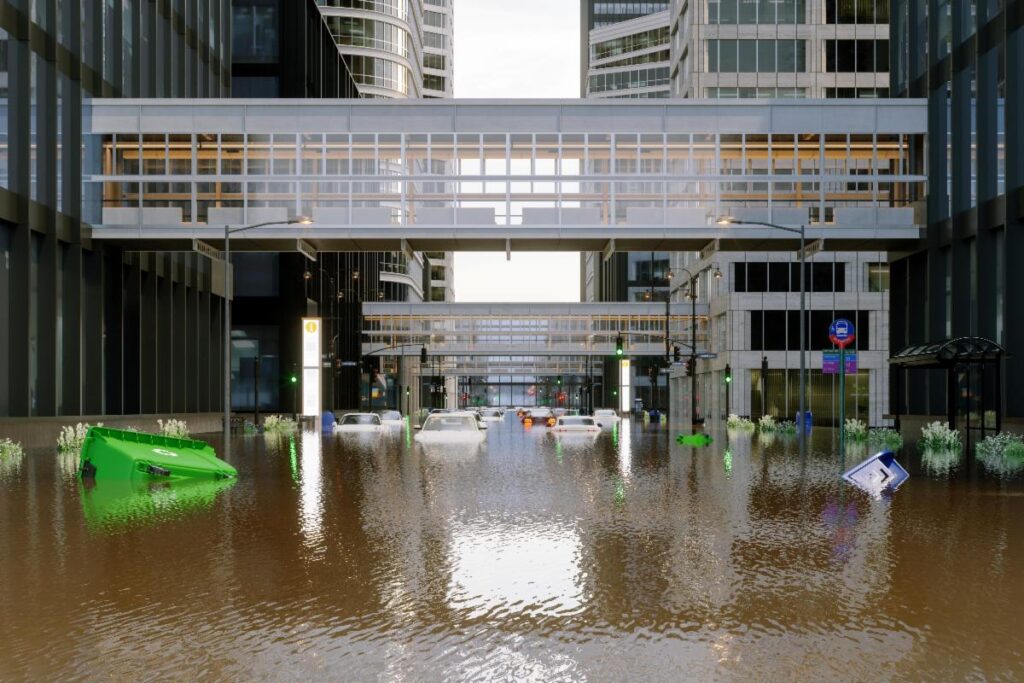
Audit committees have long been the mandated nexus of corporate financial reporting, internal controls, and risk management. Even though these committees face a full slate of topical oversight and compliance – financial, internal audit, AI, cyber, ESG, Sustainability, DEI – 2025 has also brought forward a new suite of risks. Namely, trade and tariffs, and geopolitical conflict. With so much responsibility across a broad spectrum of issues, have audit committees become the “kitchen sink” of corporate boards?

The kitchen sink committee – AI, Cyber, ESG, and now, tariffs. Are Audit Committees ready? Read More »

Board series: Markets moving faster than board skills – Facing the hard reality of AI, ESG, supply chain, and cyber

In the next decade, the most competitive companies will be governed not by the most prestigious resumes, but by boards engineered for complexity. U.S. boardrooms are re-skilling under pressure from four converging forces: (i) AI deployment and risk, (ii) supply chain and ESG regulation that reaches deep into suppliers, (iii) increasing geopolitical tensions, and (iv) heightened investor scrutiny of board capability, disclosure, and refreshment. In 2025 and beyond, governance sophistication is no longer optional – it is a determinant of market value, stakeholder trust, and competitiveness.

Board series: Markets moving faster than board skills – Facing the hard reality of AI, ESG, supply chain, and cyber Read More »

Board series: The state of the global energy transition – What the close of 2025 signals for 2026

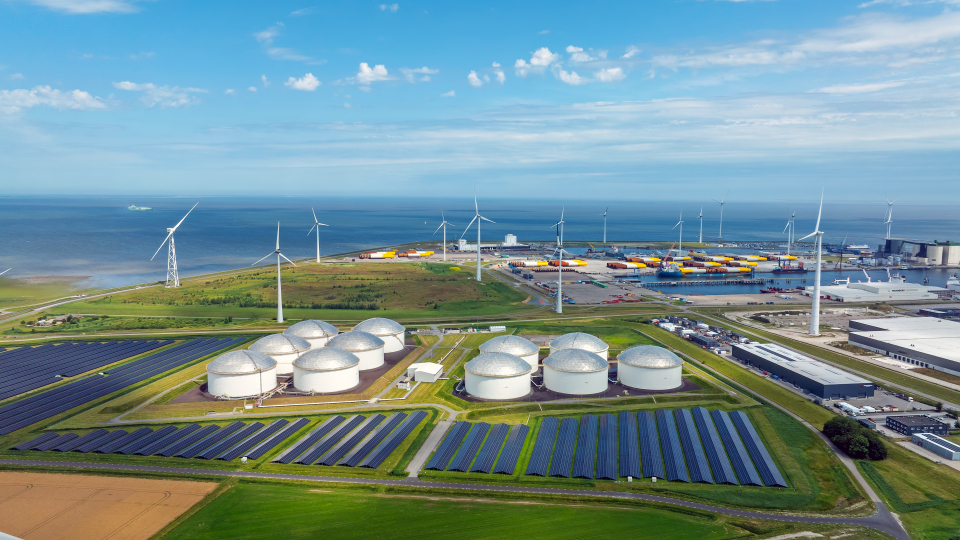
Large multinationals are moving from pledges to procurement and projects — locking in long-dated clean power contracts, electrifying heat and fleets, re-tooling supply chains, and backing carbon removal. More broadly, the global energy transition to renewable technologies remains intact, but uneven. Global energy investment will reach $3.3 trillion USD in 2025, with $2.2 trillion being invested in renewables, nuclear, grids, storage, low-emissions fuels, efficiency, and electrification (which stands at 2x fossil investment). On a dual-track energy system — adding clean energy capacity without fully displacing fossil fuels — China, the EU, India, and the U.S. continue to drive most of the additions.

Board series: The state of the global energy transition – What the close of 2025 signals for 2026 Read More »

Higher Education Brief: What’s in a university’s environmental footprint?

For all the environment and sustainability-focused talk on campuses, granular knowledge of what makes up a university’s footprint is often missing. From energy intensive laboratories to manicured lawns and long commutes, it can be quite complex to make sense of a university’s footprint. Yet, understanding where institutions consume the most energy, water, and waste – and generate emissions – is the first step towards being sustainable and lowering operational costs. For higher education leaders, knowing where to look and what to tackle first is critical to making meaningful progress.

Higher Education Brief: What’s in a university’s environmental footprint? Read More »

Real Estate Brief: From exposure to advantage – Navigating climate risk in real estate

The U.S. power grid is straining under the weight of aging infrastructure, extreme weather, and surging demand from AI, EVs, and electrification. Real estate, which consumes the 75% of U.S. electricity, is going to be directly impacted. What was once a stable utility is now a strategic risk—and potentially, a competitive advantage. The question isn’t whether grid disruption will affect your portfolio, but how you’ll lead through it.

Real Estate Brief: From exposure to advantage – Navigating climate risk in real estate Read More »

Board series: Managing the backlash in the boardroom – The quiet strength of Sustainability oversight

With broad policy upheaval in the U.S. under President Trump’s second term, Sustainability Committees on corporate boards stand on shaky ground. The administration has effectively terminated and significant allocations for renewable energy, retreated from the Paris Agreement, spurred ESG-backlash, weakened the EPA, NOAA, and SEC mandates. At the same time, the global momentum for ESG and Sustainability persists. Even if the political momentum is going in one direction, board members will have to balance the reality of climate, social, litigation, and governance risks remain financially material and globally governed.

Board series: Managing the backlash in the boardroom – The quiet strength of Sustainability oversight Read More »

Real Estate Brief: Power shift – Why the grid now belongs on every real estate agenda

The U.S. power grid is straining under the weight of aging infrastructure, extreme weather, and surging demand from AI, EVs, and electrification. Real estate, which consumes the 75% of U.S. electricity, is going to be directly impacted. What was once a stable utility is now a strategic risk—and potentially, a competitive advantage. The question isn’t whether grid disruption will affect your portfolio, but how you’ll lead through it.

Real Estate Brief: Power shift – Why the grid now belongs on every real estate agenda Read More »

Board series: The Kitchen Sink Committee – AI, Cyber, ESG, and, now, tariffs. Are Audit Committees ready?

Audit committees have long been the mandated nexus of corporate financial reporting, internal controls, and risk management. Even though these committees face a full slate of topical oversight and compliance – financial, internal audit, AI, cyber, ESG, Sustainability, DEI – 2025 has also brought forward a new suite of risks. Namely, trade and tariffs, and geopolitical conflict. With so much responsibility across a broad spectrum of issues, have audit committees become the “kitchen sink” of corporate boards?
Board series: The Kitchen Sink Committee – AI, Cyber, ESG, and, now, tariffs. Are Audit Committees ready? Read More »

Board series: Physical Climate risk

Some have attributed the unexpected wins for progressive-leaning candidates in Canada and Australia to the “Trump Effect”—where policies and approach from U.S. President Trump have inadvertently galvanized electorates to non-populist electoral victories. While it may be too soon to call it a definite trend, corporate boards should evaluate key elections in 2025 to determine where there might be more political turbulence than anticipated. What additional surprises will 2025 hold?

Board series: Physical Climate risk Read More »

Telesto Strategy Champions Water Week Conversation on the Future of Corporate Water Stewardship

MAY 6, 2025 Telesto Strategy Champions Water Week Conversation on the Future of Corporate Water Stewardships Telesto Strategy hosted the event as part of Current’s Chicago Water Week and featured insights on emerging water trends, business opportunities, and meaningful dialogue among professionals in the water and sustainability space. CHICAGO, IL – May 2025 – Telesto

Telesto Strategy Champions Water Week Conversation on the Future of Corporate Water Stewardship Read More »

Scroll to Top