Boardroom

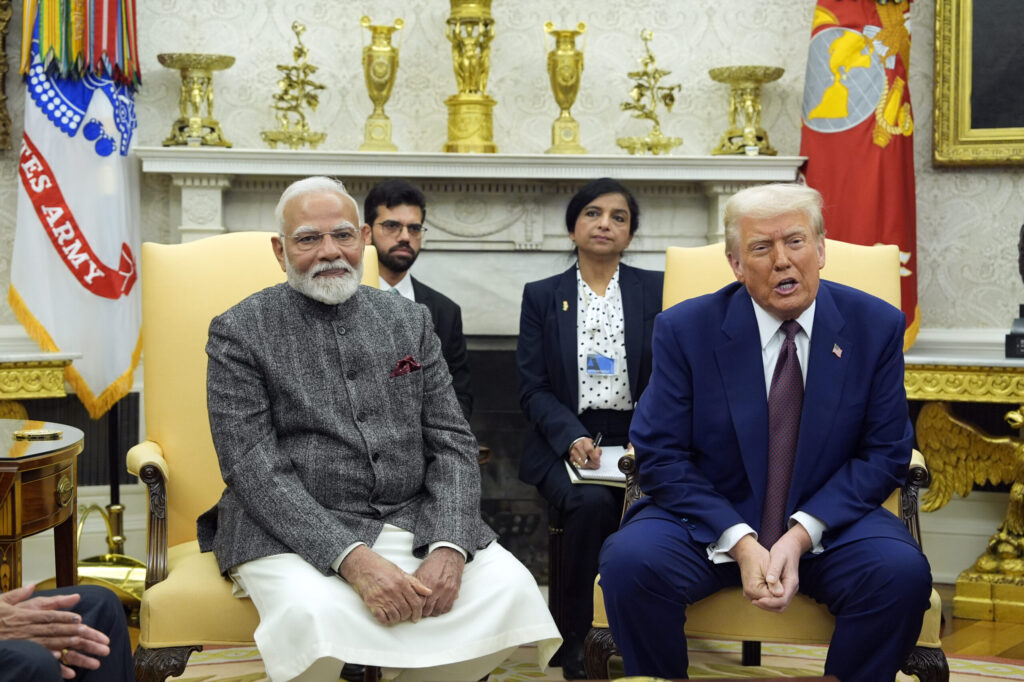
Board series: The India imperative – Geopolitics reshape industrial supply chains

With broad policy upheaval in the U.S. under President Trump’s second term, Sustainability Committees on corporate boards stand on shaky ground. The administration has effectively terminated and significant allocations for renewable energy, retreated from the Paris Agreement, spurred ESG-backlash, weakened the EPA, NOAA, and SEC mandates. At the same time, the global momentum for ESG and Sustainability persists. Even if the political momentum is going in one direction, board members will have to balance the reality of climate, social, litigation, and governance risks remain financially material and globally governed.

Board series: The India imperative – Geopolitics reshape industrial supply chains Read More »

Board series: Managing the backlash in the boardroom – The quiet strength of Sustainability oversight

With broad policy upheaval in the U.S. under President Trump’s second term, Sustainability Committees on corporate boards stand on shaky ground. The administration has effectively terminated and significant allocations for renewable energy, retreated from the Paris Agreement, spurred ESG-backlash, weakened the EPA, NOAA, and SEC mandates. At the same time, the global momentum for ESG and Sustainability persists. Even if the political momentum is going in one direction, board members will have to balance the reality of climate, social, litigation, and governance risks remain financially material and globally governed.

Board series: Managing the backlash in the boardroom – The quiet strength of Sustainability oversight Read More »

Board Series: With IRA Tax Credits pulled and OBBBA passed, what’s next?

The passage of The Big Beautiful Bill (OBBBA) on Friday, July 4th, marks a decisive recalibration of U.S. clean-energy policy and incentive structure—elevating urgency, compliance, and strategic flexibility for corporations. The upending of financial incentives create a real-time operational challenge. Boards must respond by aligning capital schedules, fortifying supply chains, and taking out cost from their decarbonization strategies. How should enterprises evolve their capital allocation for operational effectiveness, ESG targets, and financial return?

Board Series: With IRA Tax Credits pulled and OBBBA passed, what’s next? Read More »

Board series: When trade policy meets the balance sheet – Impairment pressures mount for audit committees

Higher input costs and reduced demand due to President Trump’s tariff policy raise red flags under U.S. GAAP and IFRS for impairment testing of non-financial assets such as property, plant, and equipment (PP&E), intangible assets, and goodwill. The increased economic uncertainty and geopolitical volatility mean projections used to determine “Value in Use” or “Fair Value” may fall below carrying amounts, signaling possible impairments. How are Audit Committees anticipating impairment risks from the material change in U.S. trade policy?

Board series: When trade policy meets the balance sheet – Impairment pressures mount for audit committees Read More »

Board series: The Kitchen Sink Committee – AI, Cyber, ESG, and, now, tariffs. Are Audit Committees ready?

Audit committees have long been the mandated nexus of corporate financial reporting, internal controls, and risk management. Even though these committees face a full slate of topical oversight and compliance – financial, internal audit, AI, cyber, ESG, Sustainability, DEI – 2025 has also brought forward a new suite of risks. Namely, trade and tariffs, and geopolitical conflict. With so much responsibility across a broad spectrum of issues, have audit committees become the “kitchen sink” of corporate boards?

Board series: The Kitchen Sink Committee – AI, Cyber, ESG, and, now, tariffs. Are Audit Committees ready? Read More »

Board series: From passive to provocative – how activist investors are reshaping boardroom dynamics in 2025

Shareholder activism is surging in 2025. Nearly 600 U.S. companies faced demands in 2024 — up 16% from 2022 — and the pressure is only growing. In Q1 2025, activist campaigns targeting U.S. companies jumped 46%. The boardroom is no longer a quiet place. How can directors ready themselves for what will be a turbulent year in the boardroom?

Board series: From passive to provocative – how activist investors are reshaping boardroom dynamics in 2025 Read More »

Board series: The Golden Dome moment – A new boardroom agenda for national security and innovation

President Trump recently announced the Golden Dome project – his equivalent to his second term’s moonshot with a goal of completion by 2029. The $175 billion project is envisioned to be a multi-layered defense architecture to shield the U.S. from advanced threats, including hypersonic and space-launched missiles. While certain defense and aerospace contractors—the likes of SpaceX, Palantir, Lockheed Martin, Boeing—remain obvious winners, industrial and CPG boards should consider the ramifications for their sectors over this decade-long investment. With the rise of national security investment, what will be the financial opportunities and operational complexities?

Board series: The Golden Dome moment – A new boardroom agenda for national security and innovation Read More »

Board Series: Onshoring to the U.S. – Have boards considered the physical risks?

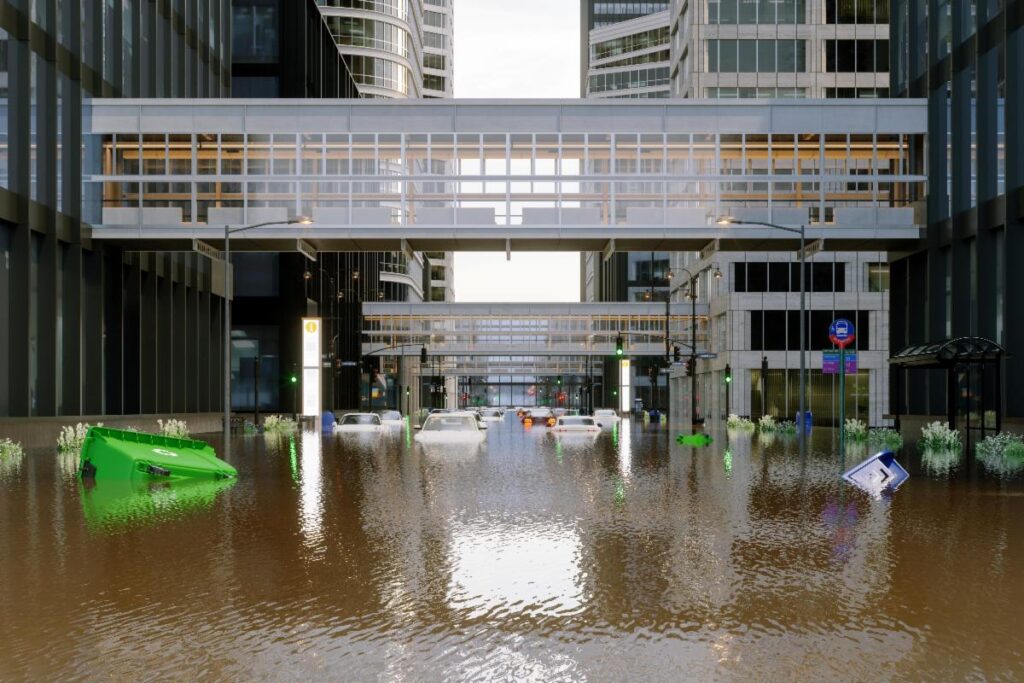
With the reorientation of manufacturing to the U.S. in response to President Trump’s trade policy, multinationals focus on potential site evaluation and selection. Be it Hyundai in Indiana, Apple in Texas, or Toyota in North Carolina, global companies have made public commitments to bring back parts of their complex supply chains to the U.S. While a myriad of factors must be considered – talent pools, state incentives, land availability, access to first-tier supplies—an underrated question is that of physical climate risks. As manufacturing returns, corporate boards will have to ask their teams what climate-driven risks—water shortages, extreme heat, or flooding—will these new sites face? Where will climate-related hazards pose the greatest threat to business continuity and long-term profitability? Is it enough to reconsider our site location?

Board Series: Onshoring to the U.S. – Have boards considered the physical risks? Read More »

Board series: The Trump Effect – Elections to watch in 2025

Some have attributed the unexpected wins for progressive-leaning candidates in Canada and Australia to the “Trump Effect”—where policies and approach from U.S. President Trump have inadvertently galvanized electorates to non-populist electoral victories. While it may be too soon to call it a definite trend, corporate boards should evaluate key elections in 2025 to determine where there might be more political turbulence than anticipated. What additional surprises will 2025 hold?

Board series: The Trump Effect – Elections to watch in 2025 Read More »

Board series: The CEO confidence gap – How can boards step up in a context of global uncertainty?

With multinational businesses stretched by intensifying geopolitical conflict, macroeconomic shocks, and global trade tensions, CEOs will need expert counsel from their corporate boards more than ever. Yet, new data shows that only one-third of CEOs say they are highly confident in their board’s ability to help them navigate the challenges facing their organization. What’s missing? What are CEOs not getting from their boards and how can the confidence gap be overcome?

Board series: The CEO confidence gap – How can boards step up in a context of global uncertainty? Read More »

Scroll to Top